Push-button light switches dominated American homes from the 1890s through the 1950s, their distinctive click becoming as familiar as a closing door. Today, after decades of obscurity, they're experiencing a passionate revival among homeowners who refuse to settle for the silent anonymity of modern switches.
The Origins (1880s–1890s)
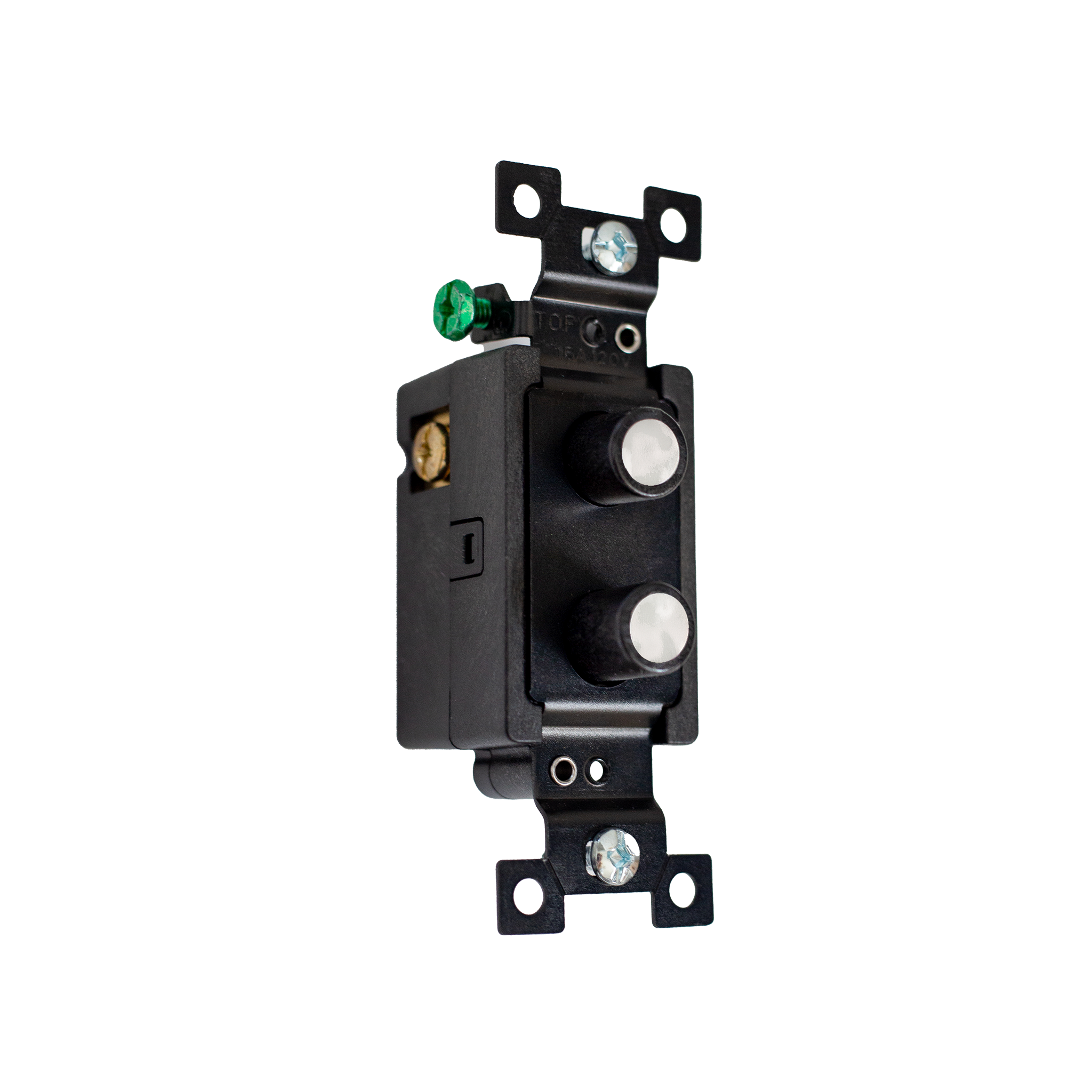 Imagine standing in a parlor in 1895. Gas lamps are giving way to electric light—this miraculous, steady glow that doesn't flicker in the wind. But how do you turn it on?
Early solutions were clumsy. Knife switches that sparked. Rotary dials that stuck. Pull chains that dangled awkwardly from ceiling fixtures. Then came the push-button—and with it, a sound that would define American homes for the next sixty years.
Click.
That satisfying, decisive click. Press once for light. Press again for dark. The push-button's appeal was intuitive: a child could understand it, yet the mechanism inside was a marvel of engineering—springs, toggles, and contacts working in precise harmony.
By the mid-1890s, manufacturers like Bryant Electric, Hubbell, and Perkins were producing push-button switches with solid brass housings and porcelain internals, built with the assumption they'd last forever. They were right. Many of these original switches still work today, their clicks as crisp as the day they were installed—over 130 years ago.
The Golden Age (1900s–1940s)
Walk through any American neighborhood built before World War II, and you're walking through push-button territory.
The Craftsman bungalow with its quarter-sawn oak trim? Push-buttons in antique brass. The Victorian painted lady on the corner? Ornate push-button plates with mother-of-pearl inlays. The Art Deco apartment building downtown? Streamlined push-buttons in polished nickel. The switch wasn't just functional—it was furniture.
Manufacturers competed on craftsmanship. Bryant Electric offered buttons carved from genuine mother-of-pearl. Hubbell developed mechanisms so precise they could withstand 100,000 cycles. Hart & Hegeman created decorative plates that complemented the finest interior design. The humble light switch became an opportunity for beauty.
And everywhere, that sound. The rhythm of American domestic life, from coast to coast: the click of the kitchen switch at dawn, the click of the porch light at dusk, the click of the bedroom lamp at the end of each day. For fifty years, that click was the sound of home.
"A quality push-button has a satisfying, decisive click—not mushy or uncertain. You know when you've turned the light on."
The switches of this era weren't designed to be replaced. They were designed to be inherited—passed from one generation to the next, still clicking perfectly.
The Decline (1950s–1970s)
Then came Levittown.
The post-war housing boom didn't need beauty. It needed speed. Builders constructing thousands of tract homes couldn't justify the cost of precision-engineered push-buttons when a simpler toggle switch did the same job for less. The toggle required fewer parts, less machining, lower skill to install. For builders racing to house returning GIs and their growing families, the math was clear.
By the 1960s, push-button switches had all but vanished from new construction. Manufacturers, following the market, shifted their production lines. The satisfying click gave way to the toggle's indifferent snap.
Worse, homeowners began ripping out their original push-buttons during renovations. "Updating" a kitchen in 1972 often meant replacing beautiful brass push-button switches with plastic toggles. Countless heirloom-quality switches—switches that had worked flawlessly for sixty years—ended up in dumpsters.
For the push-button, the 1970s were the dark ages. Production ceased. Parts became scarce. A switch that had once been standard equipment became a curiosity, found only in unrenovated historic homes and architectural salvage shops.
The Resurgence (2000s–Present)
Something changed around the turn of the millennium. Maybe it was HGTV. Maybe it was the preservation movement gaining mainstream attention. Maybe people just got tired of touching the same featureless plastic rectangles every day of their lives.
Whatever the cause, homeowners began rediscovering push-button switches. Restorers of Craftsman bungalows sought period-accurate details. Midcentury modern enthusiasts wanted authenticity. Even owners of new construction started asking: Why does every switch in America look exactly the same?
Architectural salvage dealers reported surging demand. eBay listings for vintage push-buttons attracted bidding wars. The problem was supply—these switches hadn't been manufactured in decades, and the vintage stock was finite and often unreliable.
Then a new generation of manufacturers emerged with a different approach: don't just reproduce the look—reengineer the switch entirely. Keep the iconic click. Keep the satisfying tactile feedback. But update the internals for modern electrical systems, LED compatibility, and contemporary safety standards.
Companies like Wallware now produce push-button switches that combine vintage aesthetics with modern reliability—the click your great-grandparents knew, engineered for your smart home.
Collecting Antique Push-Button Switches
Today, antique push-button light switches have become prized collectibles. Original switches from Bryant Electric, Hubbell, and Hart & Hegeman—particularly those with mother-of-pearl buttons or ornate brass plates—command premium prices at architectural salvage shops and online auctions.
What makes an antique push-button switch valuable? Condition matters most. Switches that still produce a crisp, satisfying click are worth more than those with worn mechanisms. Original finish (unpolished patina is preferred by collectors), complete mounting hardware, and rare configurations (like four-gang plates or unusual finishes) all increase value.
For homeowners, antique switches offer authentic period character but come with uncertainty about internal condition and electrical safety. If you're considering vintage switches for actual use rather than display, have them inspected by a qualified electrician—or consider modern reproductions that deliver the same aesthetic with contemporary safety standards.
Why the Click Still Matters
Here's what's remarkable about the push-button's story: the switches that survived the purges—the ones that weren't ripped out and thrown away—are mostly still working. A century of daily use, and they still click.
Try finding a touchscreen that lasts a decade.
In an age of planned obsolescence, of products designed to be replaced, the push-button switch represents something increasingly rare: an object built to outlast its maker. The original manufacturers are gone. The factories are closed. But their switches remain, still clicking, still faithful, still beautiful.
Whether you're restoring a historic home with period-accurate details, designing a new space with vintage character, or simply tired of the forgettable plastic rectangles that dominate modern hardware stores—push-button switches offer something no toggle or rocker can match.
A connection to craftsmanship. A tactile experience. A sound.
Click.
Ready to experience the difference? Learn how push-button switches work, explore our buying guide, or browse design inspiration for your space.
The Push-Button Timeline
Edison's Light Bulb
Thomas Edison demonstrates the first practical incandescent light bulb, creating the need for convenient electrical switching devices in homes.
First Wall Switches
Early knife switches and rotary switches appear in homes, but they're cumbersome and sometimes dangerous to operate.
Push-Button Patents
Multiple patents filed for push-button switching mechanisms. Bryant Electric and Perkins begin commercial production.
Industry Standardization
Push-button switches become the standard for residential and commercial installations. Major manufacturers include Bryant, Hubbell, and Hart & Hegeman.
Peak Production
Push-button switches reach peak popularity. Decorative options flourish including mother-of-pearl buttons, brass plates, and ornate designs.
War-Time Changes
World War II brings material shortages. Manufacturers begin simplifying designs and exploring cheaper alternatives.
Toggle Takes Over
Post-war housing boom demands cheaper, faster construction. Toggle switches become the builder's choice due to lower manufacturing costs.
Near Extinction
Push-button switches virtually disappear from new construction. Many homeowners remove original switches during renovations.
Preservation Movement
Historic preservation gains momentum. Salvage shops see increased demand for vintage push-button switches.
Modern Revival
New manufacturers begin producing reproduction push-button switches. Interest grows in midcentury and craftsman aesthetics.
Reengineered for Today
Companies like Wallware introduce reengineered push-button switches that combine vintage aesthetics with modern reliability and LED compatibility.